Peter Morin, This is what happens when you perform the memory of the land (parts 1 and 2), 2013

Peter Morin, This is what happens when you perform the memory of the land (parts 1 and 2), 2013, performance.
The 2013 performance cycle of Peter Morin (b.1977) of Tahltan Nation, British Columbia, constitutes one of the most consequential articulations of Indigenous performance art in contemporary Canada. Conceived as a single, year-long project that included the performances This is what happens when you perform the memory of the land, Hair (in which human hair was woven into a button blanket as an act of collective offering), and This is not a Simple Movement, the cycle approached performance not as a discrete artistic genre but as a relational and ceremonial practice grounded in Indigenous law, kinship, and more-than-human collaboration. Across these interconnected works, Morin foregrounds the agency of materials and beings commonly treated as inert within Western art discourse. “Drums, Rattles, Mask, Button Blanket, Eagle Fan, Fire, and Moon” are understood as “active collaborators” rather than props, shaping the meaning and outcome of each performance with their presence. This recognition articulates an Indigenous world view in which artworks, materials, and ancestral forces share intention and responsibility. Performance becomes a site of encounter instead of display, one in which agency is distributed across human and non-human relations.

Peter Morin, This is not a Simple Movement (parts 1 and 2), datetk, performance.
The project’s originating intention emerged publicly at the Reconciliation: Works in Progress gathering at Algoma University in 2012, where Morin committed to creating regalia for the children who did not survive residential schools and then burning that regalia so that those children would have something to dance in.
This vow transformed the performances into offerings structured around care, mourning,
and continuation. Rather than stage trauma as spectacle, Morin activated an Indigenous practice of transfer. Fire received the regalia, remade it, and delivered it across relational realms. Loss was addressed through responsibility as opposed to representation.
At the centre of the cycle lay a refusal to separate artistic production from Indigenous knowledge systems. Morin recalled a teaching that the tree calls back to the carver, emphasizing reciprocity as a condition of making. The performances unfolded within a cosmology where materials, tools, ancestors, and land acted as co-creators. Audiences were asked to come closer and to recognize performance as an intersubjective field shaped by breath, rhythm, and presence, not as an object for detached viewing.
The burning of the regalia in This is not a Simple Movement became the project’s defining gesture. It was not an act of destruction but one of renewal and continuity. Song, fire, and movement functioned as Indigenous tools for transformation, operating outside of the extractive logics of the institutions that have historically framed Indigenous art and history. Through these gestures, Morin asserted Indigenous visual sovereignty by locating authority within ceremony, relational accountability, and lived Indigenous law.
The performance cycle demonstrated how Indigenous performance can function simultaneously as ceremony, testimony, and futurity. Memory is activated as relation, and those who never returned home are honoured through movement, song, and the promise of ongoing presence.
Gallery of A New Generation of Witness

Sonny Assu, Leila’s Desk, 2013

Michael Barber, A Silent Sky, 2022

Christi Belcourt, Giniigaaniimenaaning (Looking Ahead), 2012

Rebecca Belmore, Apparition, 2013

Rain Cabana-Boucher, Laying Flowers, 2021–24

Quill Christie-Peters, Portrait of Ste. Margaret’s Residential School and All It Could Not Contain, 2018

Dana Claxton, Headdress – Shadae and her Girlz, 2023

Beau Dick, The Ghost Confined to the Chair, 2012
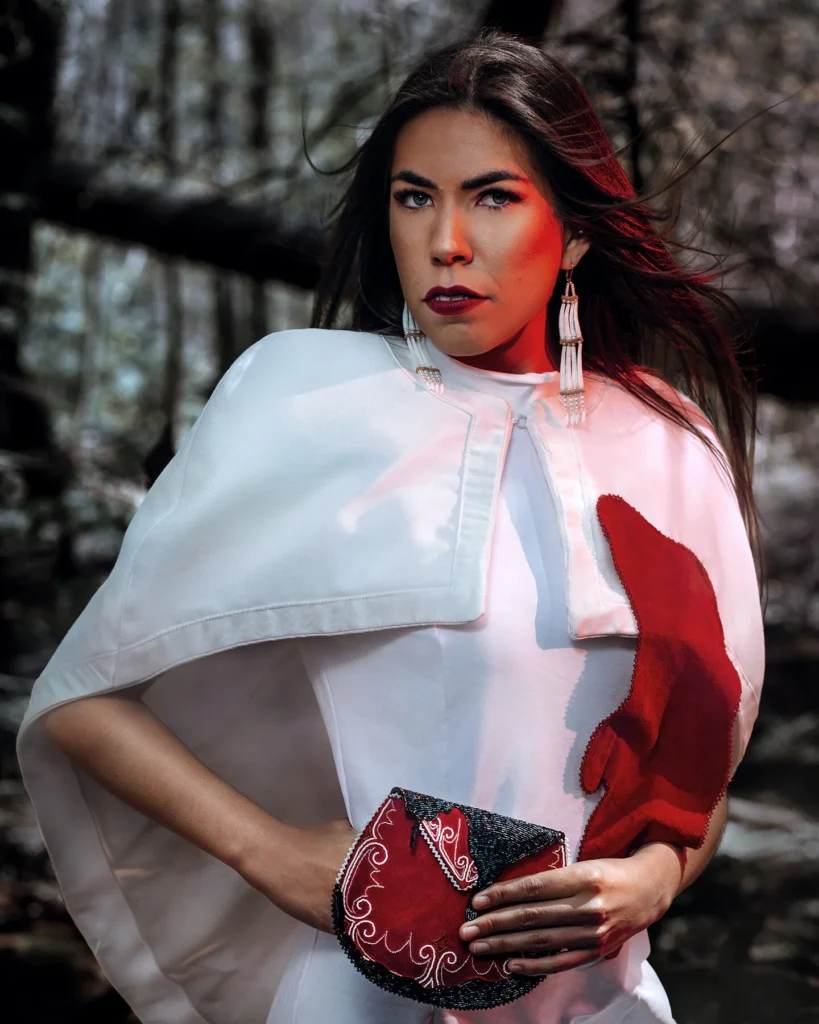
Oakley Rain Wysote Gray, Bleeding Heart Cape – M’st No’gmaq (All My Relations), 2021

7IDANsuu James Hart, Reconciliation Pole: Honouring a Time Before, During and After Canada’s Indian Residential Schools, 2015–17

Emma Hassencahl-Perley, White Flag, 2015

Brent Henry, English Only!, 2021

Shawn Hunt, Flipping the Bird, 2014

Lisa Jackson, Savage, 2009
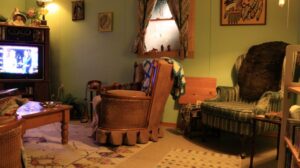
Ursula Johnson, ITHA: The Livingroom, 2021

Siassie Kenneally, All the Things That I Have Seen, 2016

Jake Kimble, It’s All So Incredibly Loud, 2025

Duane Linklater, i want to forget the english language, ulterior, 2020/23

Jim Logan, National Pastimes, 1991

Luke Marston, Bentwood Box, 2009

Kevin McKenzie, Being Indigenous, 2024

Meryl McMaster, Truth to Power, 2017

Kent Monkman, The Scream, 2017

Caroline Monnet, The Black Case, 2014

Tim Moore, Erasure Is Futile, 2021
Peter Morin, This is what happens when you perform the memory of the land (parts 1 and 2), 2013
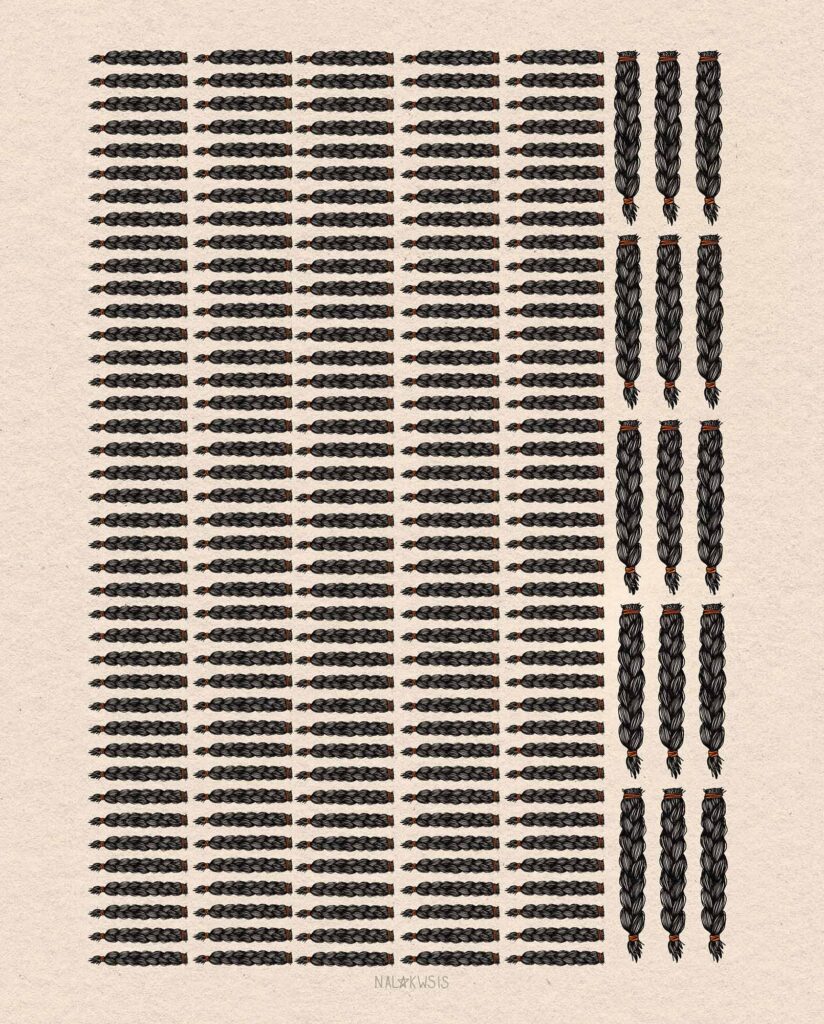
Saige “Nalakwsis” Mukash, 215 Braids, 2021

Nadia Myre, Indian Act, 2000–2002

Carey Newman, Witness Blanket, 2013–14

Davidee Ningeok, Sr., Residential School Nightmare, 2015

Shelley Niro, The Shirt, 2003

Luke Parnell, Neon Reconciliation Explosion, 2020

Dionne Paul, Her First Day of School, 2013
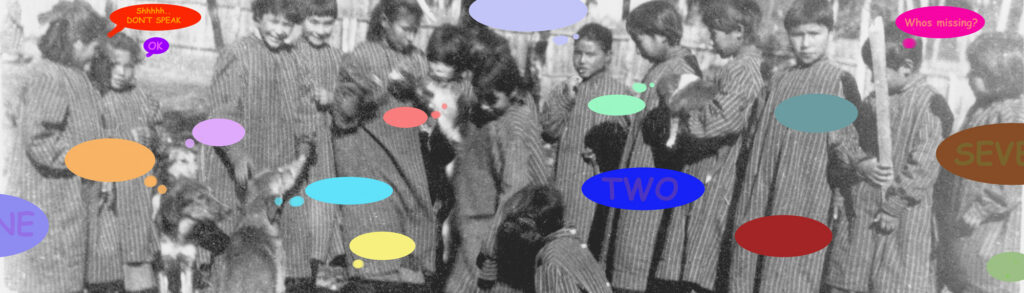
Edward Poitras, Don’t Speak, 2015

Barry Pottle, Yale Dormitory (Residential School), North West River, Labrador, 2015

Teharihulen Michel Savard, Reciprocity (Réciprocité), 2009

Jason Sikoak, Sacrilege, 2015

Greg Staats, Do’-gah – I don’t know [shrugging shoulders], 2020, archival pigment print on canvas on pine stretcher, oil, earth, Indian tobacco ash (edition 2 of 3), 142 x 175.3 x 2.5 cm, Agnes Etherington Art Centre, Kingston.

Alan Syliboy, Grandmother 1, 1997

Jeff Thomas, Broken Treaties, 1613–, 2020
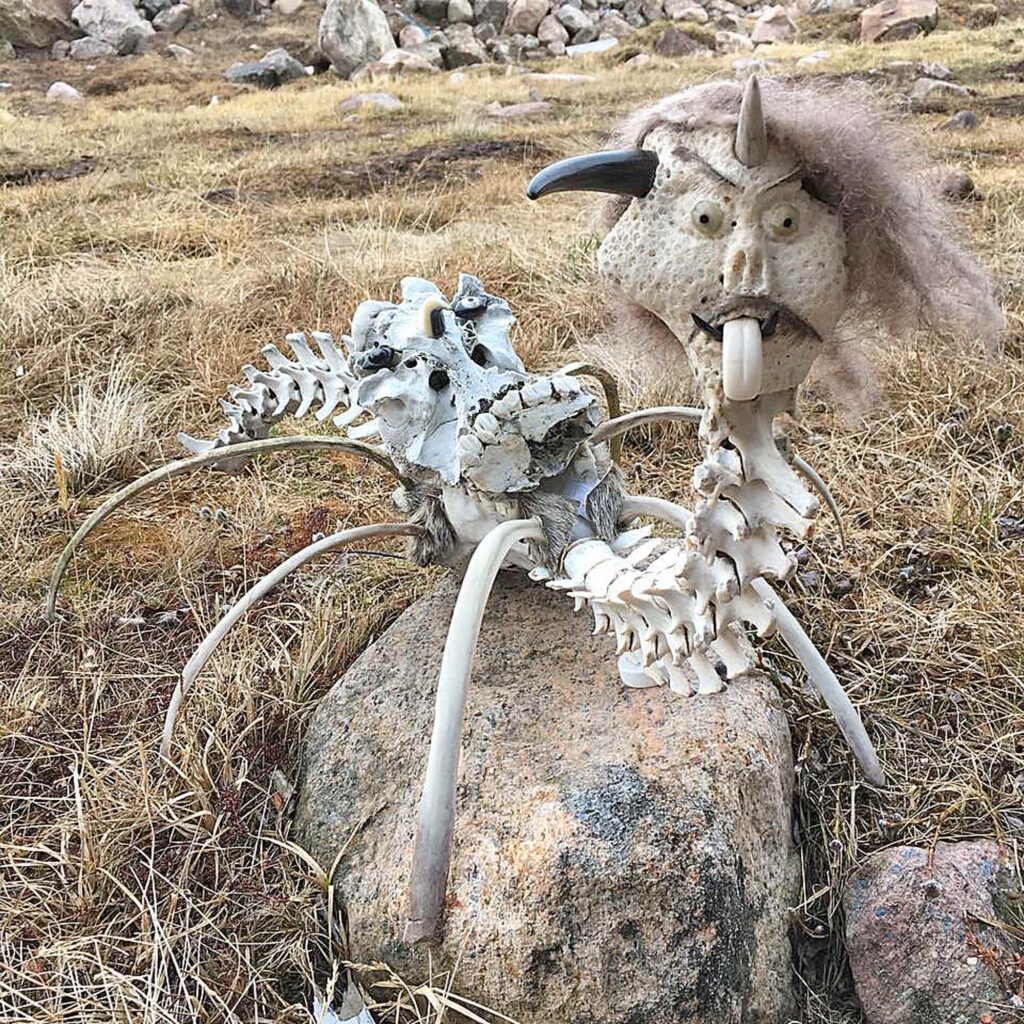
Jesse Tungilik, The Spirit of Intergenerational Trauma, 2019

Tania Willard, Be a Good Girl, 2017