Kevin McKenzie, Being Indigenous, 2024

Kevin McKenzie, Being Indigenous, 2024, acrylic on canvas, 81.3 x 96.5 cm.
Being Indigenous by Cree and Métis artist Kevin McKenzie (b.1961) draws from his method of blending Indigenous materials and motifs with colonial and pop culture symbols. While explicit details are limited, the work exists in a landscape where rawhide, sinew, hide, animal materials, and beading as well as references to hockey,
hot rods, comic books, and youth culture all converge. These cultural materials become more than aesthetics: they are carriers of identity, memory, and resistance. The lived experience of cultural rupture caused by the residential school system is not represented by literal scenes or documentary realism but through the very textures, forms, and symbols McKenzie invokes through what he chooses to preserve, rework, and revive.

Kevin McKenzie, Truth and…, 2022, acrylic on canvas, 81.3 x 96.5 cm.
As part of McKenzie’s exhibition Edge of Seventeen, Being Indigenous is a deeply autobiographical work that navigates grief, memory, and identity through the lingering legacy of residential school trauma, popular culture, and Indigenous resurgence. McKenzie’s father survived the Lebret Residential School, and his early death when the artist was seventeen left him with both the weight of loss and a responsibility to carry forward what his father had taught him. The painting functions as a node in this emotional and cultural inheritance—it is an act of reclamation.
In Being Indigenous, the trauma of the residential school becomes generational, internalized, but also something that is confronted. McKenzie’s personal passage through losing his father and navigating spaces without those traditional teachings fully passed to him makes the work one of partial inheritance and ongoing reconstruction. It resists smooth narrative closure. Instead, it holds both absence and presence in tension: the absence of a father’s voice, the presence of his values, loss and memory, damage and creativity.
In this way, the work resonates in the context of the Truth and Reconciliation Commission of Canada (TRC) and the era of residential schools. It enacts the TRC’s
call for memory, for telling the truth, and for recognizing intergenerational trauma.
But it also goes beyond these calls; it demonstrates what reconciliation might look
like from an Indigenous subject who is committed to regeneration. The creation of a contemporary Indigenous identity that incorporates resonances with pop culture, youth forms, rural culture, transnational influences, and ancestral practice is itself an act of resistance.
A further dimension is McKenzie’s use of popular culture as a means of giving voice where official structures attempted suppression. For instance, honouring his father’s passion for hockey is not nostalgia alone. It connects with the cultural importance of sport as identity
and belonging but also with colonial histories that often excluded Indigenous participation
or appropriated cultural spaces.
In Being Indigenous, McKenzie offers neither victim narrative nor triumphalist resolution. Rather, the work is vulnerable and generative, wounded but not defeated. It invites the viewer into a space where identity is being made, where grief and celebration coexist, and where being Indigenous is a constant becoming rather than a fixed state. This painting is a powerful counterpoint to colonial narratives. It asserts that Indigenous identity cannot be erased, and it shows how memory, personal loss, material culture, and creativity fuse to construct new capacities for survival and belonging.
Gallery of A New Generation of Witness

Sonny Assu, Leila’s Desk, 2013

Michael Barber, A Silent Sky, 2022

Christi Belcourt, Giniigaaniimenaaning (Looking Ahead), 2012

Rebecca Belmore, Apparition, 2013

Rain Cabana-Boucher, Laying Flowers, 2021–24

Quill Christie-Peters, Portrait of Ste. Margaret’s Residential School and All It Could Not Contain, 2018

Dana Claxton, Headdress – Shadae and her Girlz, 2023

Beau Dick, The Ghost Confined to the Chair, 2012
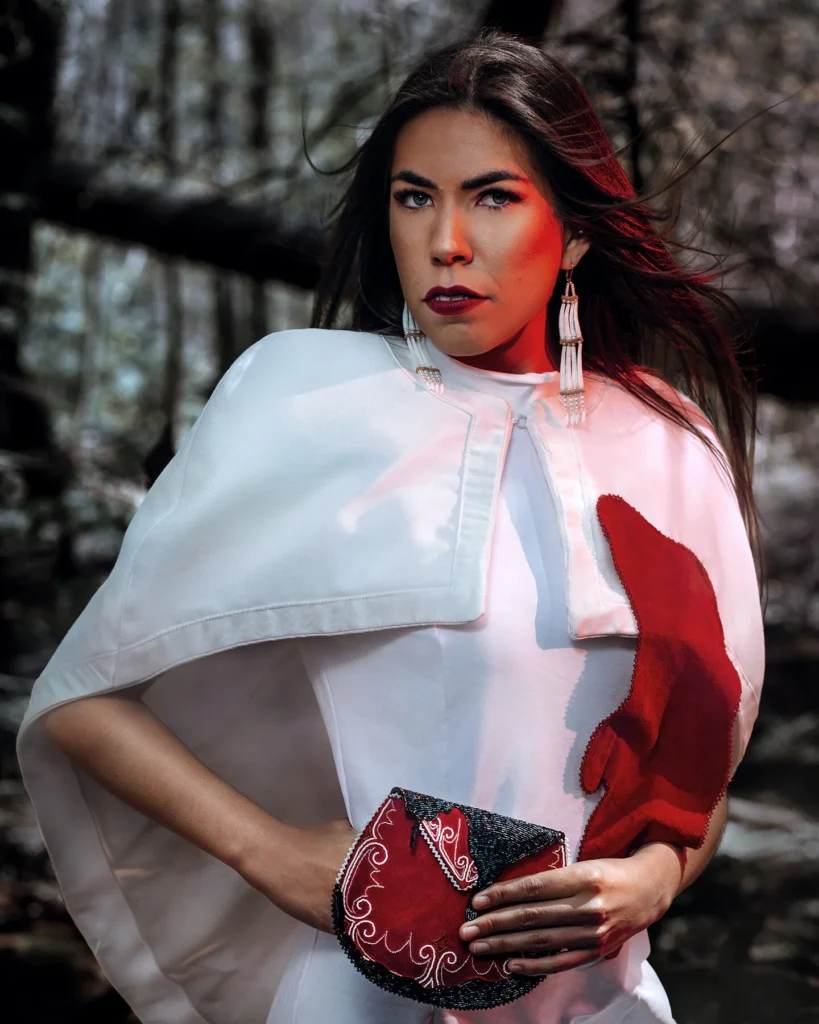
Oakley Rain Wysote Gray, Bleeding Heart Cape – M’st No’gmaq (All My Relations), 2021

7IDANsuu James Hart, Reconciliation Pole: Honouring a Time Before, During and After Canada’s Indian Residential Schools, 2015–17

Emma Hassencahl-Perley, White Flag, 2015

Brent Henry, English Only!, 2021

Shawn Hunt, Flipping the Bird, 2014

Lisa Jackson, Savage, 2009
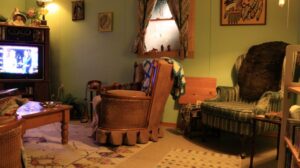
Ursula Johnson, ITHA: The Livingroom, 2021

Siassie Kenneally, All the Things That I Have Seen, 2016

Jake Kimble, It’s All So Incredibly Loud, 2025

Duane Linklater, i want to forget the english language, ulterior, 2020/23

Jim Logan, National Pastimes, 1991

Luke Marston, Bentwood Box, 2009
Kevin McKenzie, Being Indigenous, 2024

Meryl McMaster, Truth to Power, 2017

Kent Monkman, The Scream, 2017

Caroline Monnet, The Black Case, 2014

Tim Moore, Erasure Is Futile, 2021

Peter Morin, This is what happens when you perform the memory of the land (parts 1 and 2), 2013
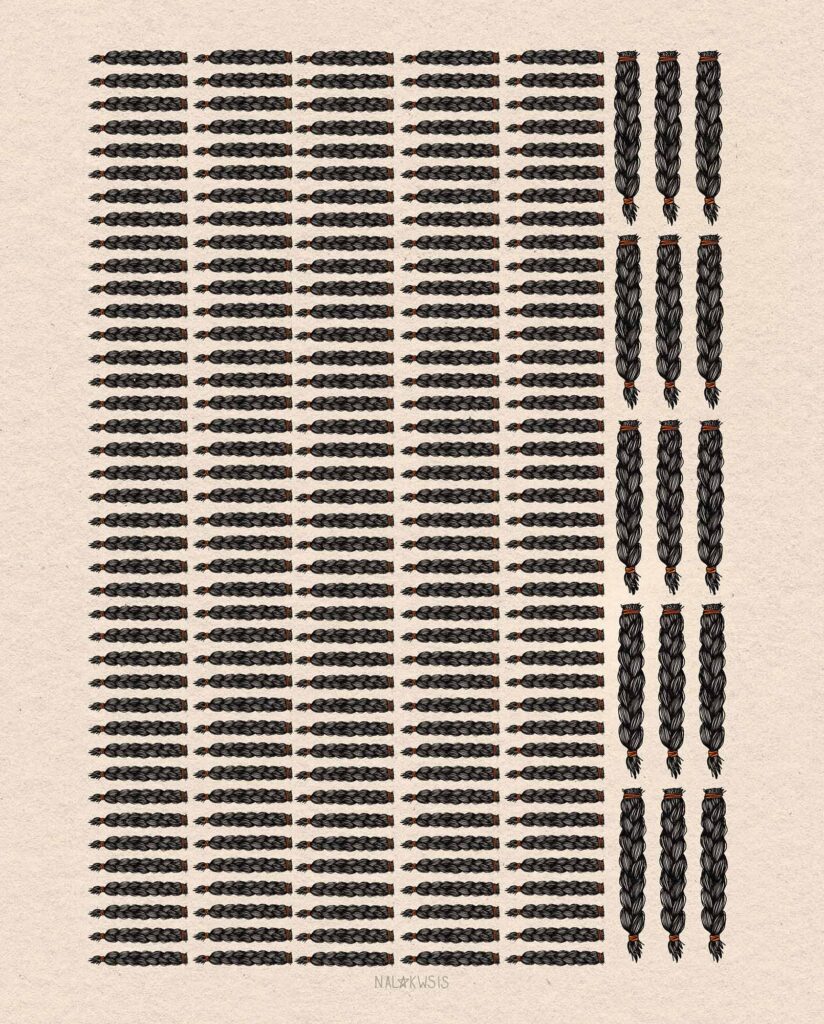
Saige “Nalakwsis” Mukash, 215 Braids, 2021

Nadia Myre, Indian Act, 2000–2002

Carey Newman, Witness Blanket, 2013–14

Davidee Ningeok, Sr., Residential School Nightmare, 2015

Shelley Niro, The Shirt, 2003

Luke Parnell, Neon Reconciliation Explosion, 2020

Dionne Paul, Her First Day of School, 2013
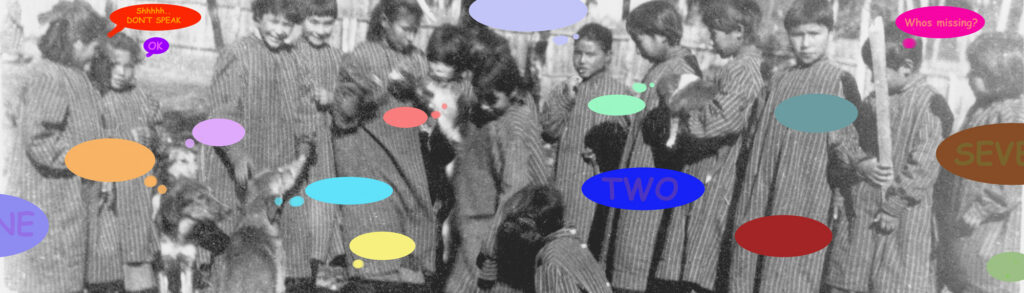
Edward Poitras, Don’t Speak, 2015

Barry Pottle, Yale Dormitory (Residential School), North West River, Labrador, 2015

Teharihulen Michel Savard, Reciprocity (Réciprocité), 2009

Jason Sikoak, Sacrilege, 2015

Greg Staats, Do’-gah – I don’t know [shrugging shoulders], 2020, archival pigment print on canvas on pine stretcher, oil, earth, Indian tobacco ash (edition 2 of 3), 142 x 175.3 x 2.5 cm, Agnes Etherington Art Centre, Kingston.

Alan Syliboy, Grandmother 1, 1997

Jeff Thomas, Broken Treaties, 1613–, 2020
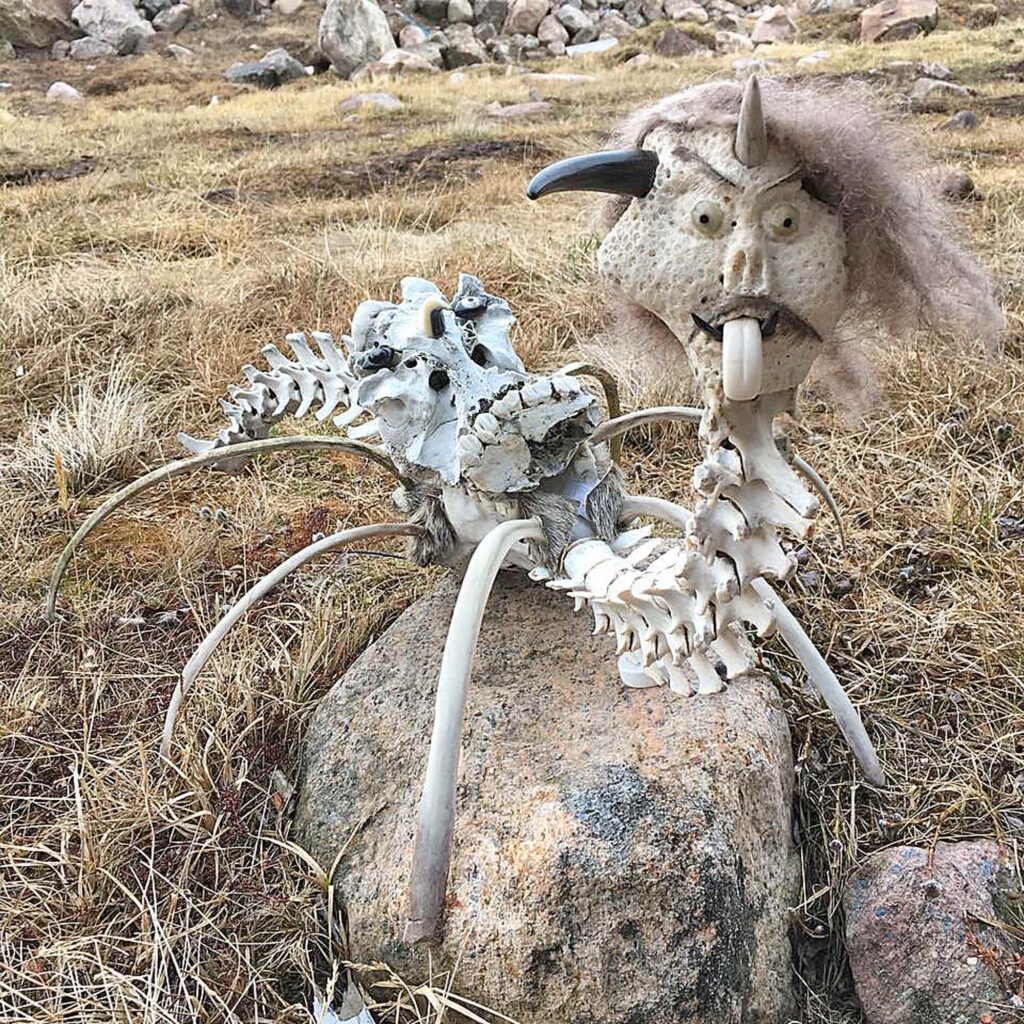
Jesse Tungilik, The Spirit of Intergenerational Trauma, 2019

Tania Willard, Be a Good Girl, 2017